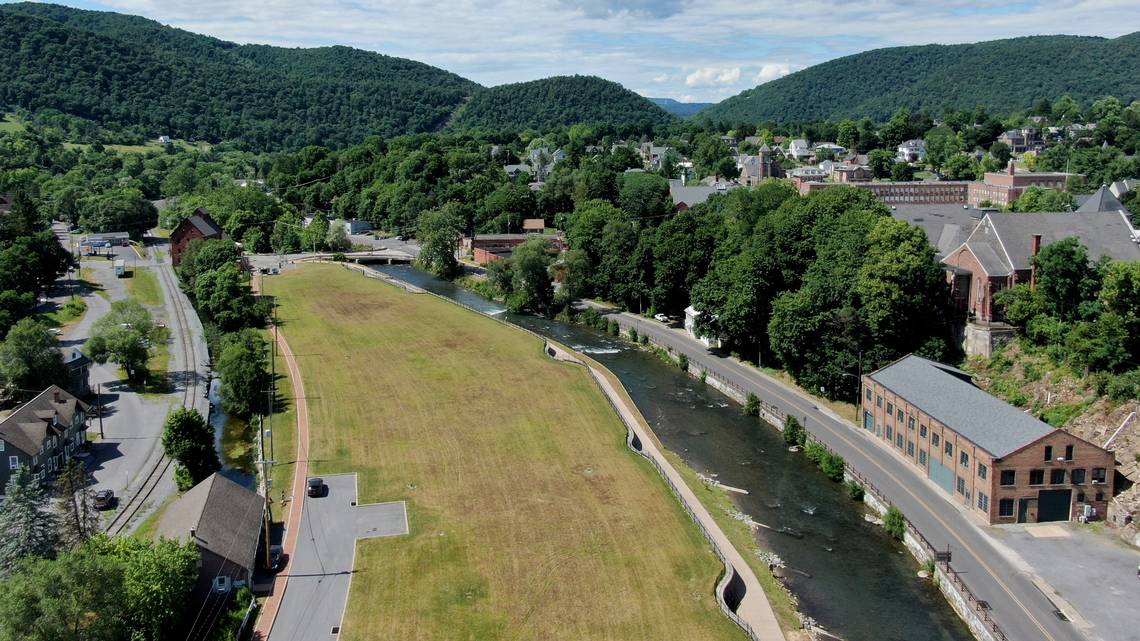
The site of Camp Songer is a large greensward perched above Spring Creek and bounded by a handsome walkway along the water. A century ago, it was occupied by The Bush House, Bellefonte’s biggest hotel, and a complex of factories. In time, it will again be home to large buildings buzzing with commerce. But now, it is a liminal space, awaiting the future but receptive to the past. Camp Songer is even more transitory. It will only last two days and may never be able to return to the place it will occupy during the early days of June 2025.
Our encampment is named after Tom Songer, a Civil War enthusiast, who owns this ground along with Mark Morath under the name of Bellefonte Waterfront Associates. Tom and Mark have allowed us to use it to illustrate the life of the soldiers who fought a century and a half ago to decide the future of our country. Camp Songer echoes the name of Camp Curtin. That camp, not nearly as ephemeral as ours, was a center for troop training and logistics near Harrisburg, named in honor of our wartime governor.
Thompson’s Independent Battery C
PA Volunteer Lt. Artillery
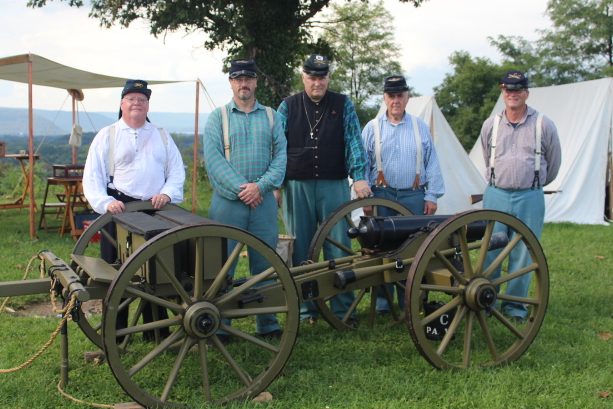
Thompson’s Independent Battery “C” is a volunteer organization dedicated to honoring those who sacrificed their lives in the American Civil War, educating others about their sacrifices and enjoying the fun of camaraderie and friendship while doing it!
The original unit that would become Independent Battery C, Pennsylvania Volunteer Light Artillery, was initially recruited in Pittsburgh by Captain James Thompson in September 1861, under the authority granted Ward H. Lamon by President Lincoln to raise a brigade of infantry, cavalry and artillery. Captain Thompson had previously offered to raise a battery for Pennsylvania, but was turned down because the federal government had not yet asked the state to supply any light artillery batteries. Therefore, James Thompson raised a battery for the Lamon Brigade, which was then recruiting in Pittsburgh as an independent unit. During the Civil War, ten independent light artillery batteries were raised for Pennsylvania. The term “independent” meant that they were without an artillery regiment affiliation: they were never part of the 1st Pennsylvania Light Artillery regiment.
The battery was a true citizen volunteer unit. The most common occupations recorded for the first 90 volunteers were laborer (24 men) and farmer (20 men). There were also five carpenters, four boatmen, four molders, three clerks, three miners, two painters, two tailors, two wagon makers and two engineers. Furthermore, these occupations were represented by one individual: dentist, bookkeeper, preacher, shoemaker, shoeing smith, teamster, blacksmith, wool spinner, peddler, druggist, carriage maker, glass blower, sailor, machinist, gardener and butcher. Three men were unemployed.
Artillery Drill Schedule
In addition to the artillery drills, members of Thompson’s Independent Battery C will
answer visitors’ questions and interpret exhibits of Civil War food, currency, and artillery.
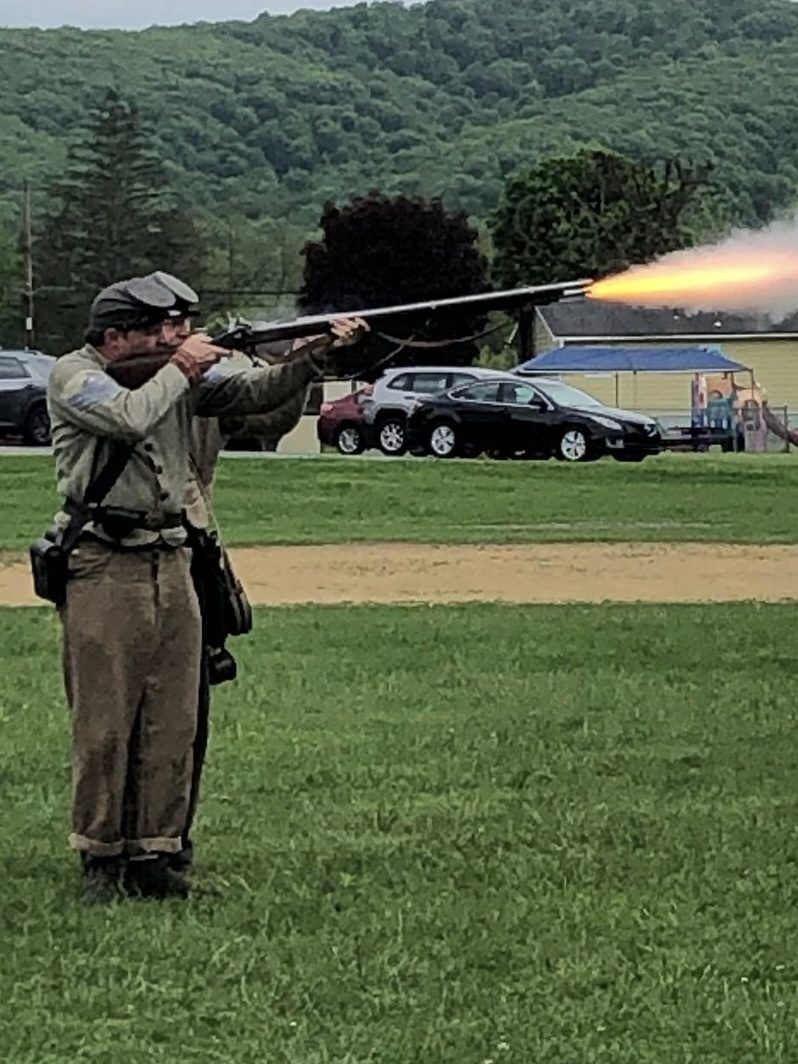
1st Sgt. John Wessner has been participating in living history events and reenactments representing both the 1700s and 1800s time periods for over twenty-five years. The majority of that time has been spent with a focus on the American Civil War and the life of the common Confederate infantryman. Sgt. Wessner will discuss the daily life of a Confederate soldier, with a display that includes the equipment and supplies that the soldiers carried in battle. He will also include a firing demonstration and a showcase of the “Manual of Arms” that the soldiers were trained in. Sgt. Wessner is also equipped to conduct infantry drill for any interested children using non-firing toy rifles. In his 21st century life, Sgt. Wessner is a 4th grade teacher, and has helped to bring the Civil War era to life for many years through a Civil War Day hosted for his students as well as through the presentation of a “Civil War Tech” course that he has offered through Appalachia IU8 and St. Francis University summer STEM education programs.
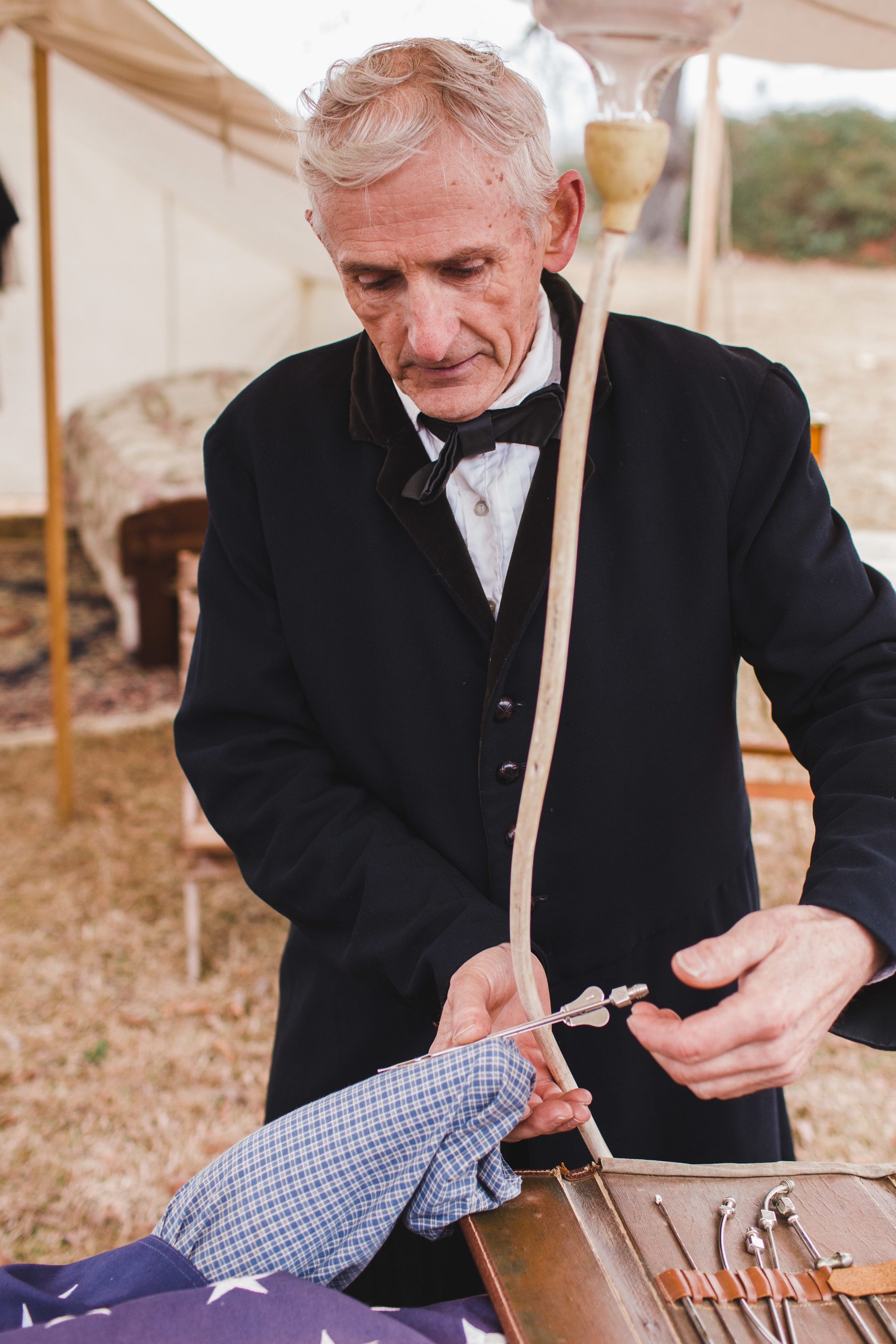
Embalming became a standard practice during the Civil War, and the mechanics of the trade have barely changed since. Aitkin says, “We do it as correctly as possible. We can back up everything we say and do from written documentation from at least two different sources.” Aitkin’s son encouraged him to reenact.
Brian will cook throughout the day and talk with folks as they stop by. Topics include a soldier’s daily rations (on display), foods made when supplies were good and not so good, who did the cooking in a company or regiment, and some of the equipment used in camp. During the 3 demonstrations, we’ll walk through preparing a dish but have one prepared ahead of time (similar to a cooking show) to show the finished result. He will use some modern cooking practices and cleanliness (wearing food-safe gloves, etc.) so that samples can be shared.

 Civil War Weekend in Bellefonte